
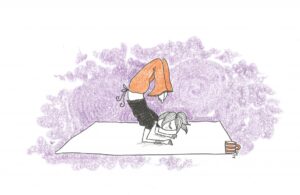
 During my first few yoga practices, I heard my teachers say that Savasana was the most difficult posture and to my inner self I always thought: Come on! I’ve seen you do Scorpion! But the reality was that every time I had to enter this posture, both at the beginning and at the end of the yoga session, my mind was more active than ever and it was very difficult to find that Savasana state that the teachers talked about… or I fell asleep! In any case, I couldn’t keep the consciousness of my body and mind completely relaxed in that precious surrender to the present.
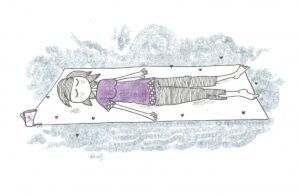 It took me time and practice to reach this state and, even today, there are times when I cannot reach it. I also see this difficulty among my students, sometimes they fall asleep, and they snore! At other times they don’t stop moving, they are restless, moving some part of their body even if only in a very subtle way. And I know that it is very normal when one “skips” the initial and/or final relaxation in personal practice. This made me reflect: what is it that really prevents us from reaching this state of deep conscious relaxation? Why is this important phase of the practice not valued? When did we lose this wonderful ability, that all children and animals have, to be in a place and a moment without doing anything else but being? Why do we think that relaxing or stopping is either a waste of time or a luxury and not a right?
 And I remembered my childhood. I was a very active girl and I loved to play, but I also remember lying on the sofa with my feet on the back and my head hanging simply looking at the shrews or lying on the floor, feeling the coolness of the tiles on my body and always, inevitably, an adult would appear and say to me: What are you doing lying there not doing anything, you have nothing to do? And I got up to do “something”. I think we’ve all suffered in one way or another this pressure of always being in action. We live in a society where if you don’t seem productive, you’re not valid… This is the beginning of a scenario of stress, to do, to do, to do, to do… and when you realize it, you don’t know how to stop.
So yes, Savasana is really difficult, since we have to disobey or ignore that unconscious voice that tells us to “do”, to disregard a mandate from childhood and society that, being unconscious, is powerful. Savasana is an act of rebellion and at the same time of deep self-esteem and love. Savasana is a right and a pleasure, a “stop” and then “do” in a more productive way.
And how is Savasana done?
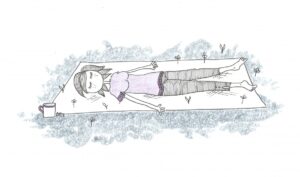
The first thing is for you to know that you have the best tools to achieve a deep conscious relaxation. Your mind and your breath. Put them at the service of Savasana! The rest, guide, music, etc. can help you and they are great.
Start by lying on your back on the floor or inside your hammock and look for your posture:
Symmetry, because it is a posture that helps us to be neutral both physically and mentally and to restore lost symmetries.
When you practice Savasana observe and feel that the two sides of your body are in a symmetrical position and that the head does not fall to the sides.
Openness, physical and/or mental.
When lying on the floor, separate the arms from the body, with the palms of the hands up, separate the legs at least the width of the hips and let the shoulders fall to the floor allowing the chest to open.
Open your mind to any sensation you perceive.
Especially in the hammock you will notice the slight swing, the suspension, being in the air, floating to the rhythm of your breathing.
Retreat. With Savasana in the hammock you will have a different physical sensation, a contrast that complements in a perfect balance the Savasana on land. Here the protagonism is the containment by the force of the fabric, stretched by our own weight, in a soft but firm embrace, in a symbolic return to the uterus, if you want to open your mind to memories of your origin.
On the floor, your Savasana provides a more mental retreat experience. While your physical posture is open, your mind is the one that can gather and address your inner experience.
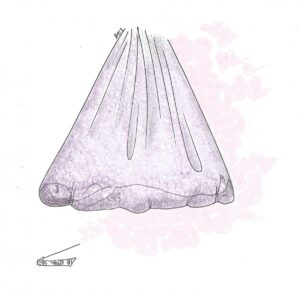 Surrender, to the earth, to the hammock, to the force of gravity, to sensation, to the present moment, to relaxation.
Give the weight of the body to the ground or to the fabric. Adapt your body to the surface of rest.
Surrender your mind, put it at the service of experience and travel the body relaxing and releasing it.
Consciousness, direct your mental attention to your breathing, and to the way your body moves and reacts to its rhythm. It is a delight to observe how the body relaxes… it seems that time stops with each inhalation, with each exhalation.
Acceptance, of what is felt, of what is. Savasana means Posture of the Corpse, to accept life and death as inevitable and valuable.
Permission. Don’t forget that little point of rebellion: Yes, I am here, learning and practicing the art of doing nothing, practicing to stay and be, without guilt and with surrender.
Keep in mind the other side of the coin, when we only allow ourselves to sleep, which is not synonymous with relaxing. It is necessary to give ourselves permission to relax without losing the wonderful connection between mind and body.
And why the tradition of practicing it at the beginning and end of the sadhana/practice?
Savasana, at the beginning of the yoga session is like preparing the earth for sowing and at the end of the session is like picking the fruit of what has been sown.
I invite you to try. Discover for yourself its multiple benefits on the mind and body. Reeeelaaaaax
Montse Lominchar

One Response
I think I can understand the philosophical meaning of Savasana for the first time. I will keep it in mind. Thank you.